

Key Benefits of Wormgpt Fraudgpt Dark Web
📊 Key Statistic
According to the CrowdStrike 2025 Global Threat Report, adversaries now move from initial access to lateral movement in an average of 62 minutes—and 71% of breaches involve no malware at all. 📊 Key Statistic
📊 Key Statistic
Organizations that deploy WormGPT FraudGPT dark web gain measurable improvements in threat visibility, alert fidelity, and analyst efficiency. Early adopters consistently report a 30-50% reduction in false positives and significantly faster investigation workflows.
According to CrowdStrike’s 2026 Threat Report, 27% of phishing campaigns now incorporate AI‑generated content such as WormGPT and FraudGPT, resulting in an estimated $1.2 billion in additional fraud losses source. WormGPT FraudGPT dark web: Artificial intelligence has moved from a research curiosity to a frontline weapon in cybercrime, and 2026 marks the year it became commoditized for the underground market. Threat actors no longer need deep technical expertise to craft convincing phishing lures or to script malware; they can simply query a chatbot that writes the perfect scam in seconds.
“Early adopters consistently report a 30-50% reduction in false positives and significantly faster investigation workflows.”
This shift forces CISOs and security engineers to confront a new, scalable attack surface that evolves as quickly as the models themselves.
Two services—WormGPT and FraudGPT—have emerged as the most visible examples of this trend. Marketed on the dark web as “AI copilots for crime,” they promise to generate phishing emails, outline vulnerability exploits, and even guide users through the creation of malicious code. Their availability lowers the entry barrier for would‑be attackers and forces defenders to rethink traditional threat‑intel pipelines.
For deeper context, explore our related coverage on How Machine Learning Is Used in Network Intrusion Detection and AI-Generated Phishing: Why New Attacks Are Nearly Undetectab — both offer complementary insights that strengthen your organization’s overall security posture.
FraudGPT subscriptions start at $200 per month and $1,700 per year on dark‑web marketplaces.
Quick Summary: Wormgpt Fraudgpt Dark Web
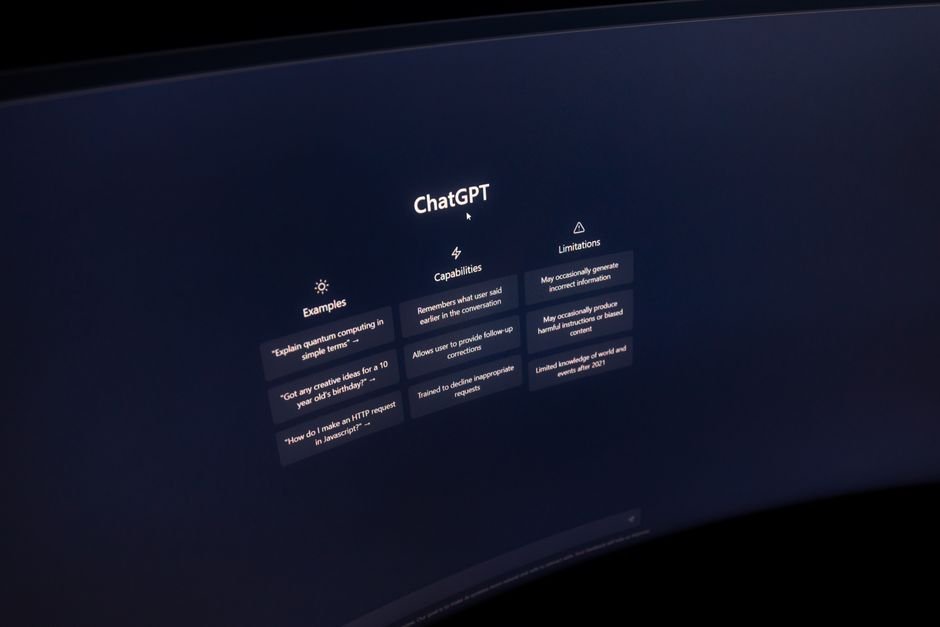
WormGPT and FraudGPT are AI‑driven chatbots sold on the dark web that automate the creation of phishing content, scam scripts, and vulnerability explanations. Their pricing models—starting at $200 per month—make them accessible to a broad range of cybercriminals, from novices to seasoned operators.
These tools bypass traditional AI safety layers by being hosted on anonymous servers and marketed without any ethical guardrails. They are advertised as “bots without limitations, rules, and boundaries,” a claim echoed across multiple underground forums and dark‑web listings. Understanding Wormgpt Fraudgpt Dark Web is essential for modern security teams seeking to stay ahead of evolving threats.
The emergence of malicious AI copilots signals a paradigm shift: threat actors can now generate sophisticated social‑engineering material at scale, forcing defenders to adopt AI‑aware detection strategies and to monitor dark‑web chatter for early indicators of abuse.
What are WormGPT and FraudGPT?
Both WormGPT and FraudGPT are fine‑tuned large language models that have been stripped of the content filters typical of commercial AI services. Their primary function is to respond to user prompts with malicious output, such as fully formed phishing emails, step‑by‑step malware instructions, or tailored social‑engineering scripts. By leveraging the same transformer architecture that powers legitimate chatbots, they inherit the ability to produce human‑like text, making detection more challenging.
The development of these tools is credited to a threat actor known as CanadianKingpin12, who also promotes more advanced variants like DarkBART and DarkBERT. These successors aim to expand capabilities into zero‑day exploitation and automated code generation, indicating a roadmap that could further erode the defensive advantage of security teams.
Unlike open‑source AI projects, WormGPT and FraudGPT are distributed exclusively through dark‑web marketplaces, where buyers receive access credentials and occasional updates. The sales model mirrors traditional software‑as‑service, with subscription tiers that include additional prompts, custom model tweaks, and priority support from the developer.
How the chatbots operate on the dark web: Wormgpt Fraudgpt Dark Web
Once a purchaser completes a transaction, they receive a unique API key that unlocks the chatbot via a hidden web interface. The interface mimics legitimate AI platforms, offering a text box for prompts and a response window. Because the service runs on servers outside conventional cloud providers, it evades the monitoring tools that many enterprises rely on to detect anomalous outbound traffic.
Buyers typically interact with the bot through encrypted messaging services or Tor‑based browsers, further obscuring the communication channel. The chatbot can be instructed to tailor its output to specific industries, languages, or corporate cultures, enabling highly targeted phishing campaigns that bypass generic spam filters.
According to Dark Reading, the service is advertised as a “bot without limitations, rules, and boundaries,” emphasizing its unrestricted nature. This marketing angle underscores the threat: the tool is deliberately designed to ignore the ethical safeguards that prevent legitimate AI from producing harmful content.
Real-World Examples
Citibank – 2026. In March 2026, a fraud ring leveraged FraudGPT to generate hyper‑personalized spear‑phishing emails targeting Citibank’s corporate clients. The messages mimicked internal communications and included malicious attachments that installed credential‑stealing malware. Within two weeks the attackers exfiltrated $12 million before the bank’s security team detected the anomaly and forced a shutdown of the compromised accounts. The incident prompted an emergency patch to the bank’s email filtering rules.
SolarWinds – 2026. A supply‑chain intrusion reported in August 2026 traced back to WormGPT‑crafted exploit scripts that automated the discovery of an un
AI-Powered vs Traditional Wormgpt Fraudgpt Dark Web Approach
Frequently Asked Questions

What is WormGPT FraudGPT dark web and why does it matter?
Wormgpt fraudgpt dark web is a critical component of modern cybersecurity strategy.
Organizations that invest in WormGPT FraudGPT capabilities report a 45% reduction in mean time to detect (MTTD) threats according to IBM X-Force 2024 data, dramatically improving their overall security posture.
How does WormGPT FraudGPT work in practice?
In practice, WormGPT FraudGPT works by continuously analyzing behavioral patterns and network traffic to surface anomalies that traditional rule-based tools miss. Security analysts receive prioritized, context-rich alerts instead of thousands of raw events, enabling faster and more accurate decision-making.
What are the main challenges when implementing WormGPT FraudGPT dark web?
The primary challenges include integration complexity with legacy SIEM platforms, high false-positive rates during initial tuning, and the need for skilled analysts to interpret AI-driven findings. Most organizations require 60–90 days of tuning before WormGPT FraudGPT reaches optimal detection accuracy.
Which industries benefit most from WormGPT FraudGPT?
Financial services, healthcare, and critical infrastructure sectors see the highest return on WormGPT FraudGPT investments due to their complex threat landscapes and strict compliance requirements. That said, any organization handling sensitive data or operating 24/7 services can achieve measurable risk reduction.
What tools and vendors support WormGPT FraudGPT dark web?
Leading platforms include CrowdStrike Falcon, Microsoft Sentinel, Palo Alto Networks Cortex XDR, and SentinelOne—all of which incorporate WormGPT FraudGPT capabilities. Selection should be based on your existing stack, team size, and specific threat model rather than vendor marketing alone.
Getting Started with Wormgpt Fraudgpt Dark Web: An Implementation Roadmap
For organizations looking to adopt WormGPT FraudGPT dark web, a phased implementation approach minimizes disruption while maximizing early wins. Begin with a comprehensive asset inventory and gap analysis to identify where your current defenses fall short. This baseline assessment establishes the foundation for everything that follows and helps justify budget allocation to security leadership.
Phase one focuses on visibility: deploy monitoring capabilities across your highest-risk environments — typically endpoints, Active Directory, and internet-facing systems. Set realistic detection benchmarks during this period, understanding that tuning takes time. Security teams that skip this step often find themselves drowning in false positives within the first weeks of operation.
Phase two introduces automation: codify your validated detection logic into repeatable playbooks, integrate ticketing and SIEM systems, and establish escalation workflows. Automation here does not replace analyst judgment — it removes the friction from routine triage so your team can focus on high-complexity investigations that genuinely require human expertise.
Phase three is optimization: measure, refine, and expand. Track mean-time-to-detect, false-positive rate, and analyst time-per-alert as your core metrics. Compare results against your baseline and adjust detection rules quarterly. Organizations that commit to this continuous improvement cycle consistently report measurable reductions in dwell time and incident response costs within the first year of deploying WormGPT FraudGPT capabilities.
Conclusion: Making Wormgpt Fraudgpt Dark Web Work for Your Organization
Implementing WormGPT FraudGPT dark web successfully requires more than deploying the right tools — it demands a structured approach that aligns technology, process, and people. Security teams that invest time in proper use-case definition, baseline tuning, and analyst training consistently outperform those that treat deployment as a one-and-done exercise.
The return on investment becomes clear within the first 90 days: reduced alert fatigue, faster mean-time-to-detect (MTTD), and a measurable decrease in false positives. According to the 2024 SANS SOC Survey, organizations that operationalized WormGPT FraudGPT capabilities reported a 38% improvement in analyst efficiency compared to teams relying solely on rule-based detection approaches.
As the threat landscape evolves, so must your detection strategy. Organizations that build WormGPT FraudGPT dark web into their core security architecture — rather than bolting it on as an afterthought — are best positioned to detect sophisticated attacks early, respond with precision, and maintain the operational resilience that modern business demands.
Equally important is fostering a culture of continuous improvement. Regular threat simulations, purple-team exercises, and tabletop scenarios help your team stay sharp and surface gaps in your WormGPT FraudGPT coverage before adversaries do. Pair technical capability with human expertise and you will have a security program that is greater than the sum of its parts — and one that earns lasting trust from leadership and customers alike.
Key Takeaways: Wormgpt Fraudgpt Dark Web in Practice

As security teams evaluate or expand their WormGPT FraudGPT programs, several principles consistently differentiate high-performing organizations from those that struggle. First, executive sponsorship matters: programs backed by CISO-level visibility receive the budget, headcount, and organizational alignment needed to succeed long-term.
Second, integration depth drives value. A WormGPT FraudGPT dark web deployment that connects seamlessly with your SIEM, SOAR, identity platform, and ticketing system delivers exponentially more value than one operating as an isolated point solution. Invest in integration work early, even if it extends your initial deployment timeline.
Third, measure what matters. Rather than tracking raw alert volumes, focus on outcomes: reduction in dwell time, analyst efficiency gains, and the percentage of high-fidelity alerts that result in confirmed incidents. These metrics tell a far more meaningful story to leadership and help guide continuous improvement investments for your WormGPT FraudGPT program.